How to Set an Intention
Choose what matters, put it into your own words, and choose when you’ll practice it. A practical guide with examples for family, work, and personal time.

To set an intention, choose something that matters to you, describe how you want to act on it, and write a short sentence you can return to. Then pick one way to practice it, put your words somewhere you'll see them, and check in on what happened.
For example: “Be present with my family.” That might mean leaving your phone on the counter during dinner. The sentence gives you a direction; the action gives you somewhere to start.
Time with my family.
Be present when we're together.
Phone away at dinner.
What is an intention?
An intention is a statement about how you want to show up in your life. It can guide the way you spend time, respond to someone, or make a choice.
A goal names a result you want to reach. An intention describes how you want to live while working toward it. You can use both.
For a closer look at how they work together, see goals vs. intentions.
| Goal | Intention |
|---|---|
| Finish a work project by Friday | Give my attention to the work in front of me. |
| Plan a weekend with my family | Be present when we're together. |
| Go for three walks this week | Make room to care for myself. |
Here is one way to choose an intention and bring it into an ordinary day.
1. Start with a moment you want to change
Think about a recent situation where your choices didn't quite match what mattered to you. Maybe you answered work messages while someone was telling you about their day. Maybe you agreed to help with something and gave up the only hour you'd kept for yourself.
Ask: What did I want to make room for in that moment?
Stay with one part of your life for now. “I want to be a better person” leaves a lot to figure out. “I want my partner to have my attention when we talk” gives you a place to begin.
If you're unsure where to start, choosing an intention that feels like yours can help you sort through what you want and what you feel expected to want.
2. Write it in words you would actually use
Turn that priority into a short sentence. You might start with “Make time for…,” “Give my attention to…,” or “Pause before…”.
You don't need to sound wise. Choose words that mean something to you when you read them on a busy afternoon.
For a starting point, browse these 15 intention examples for work, family, and time for yourself.
“Stop being so distracted” could become “Give my family my attention.” The second version tells you what to turn toward. “Never get upset” could become “Pause before I respond.” It leaves room for a feeling while naming a choice you can practice.
Read your sentence back. Can you picture a moment when it would help you decide what to do? If it's hard to tell, make the wording more specific.
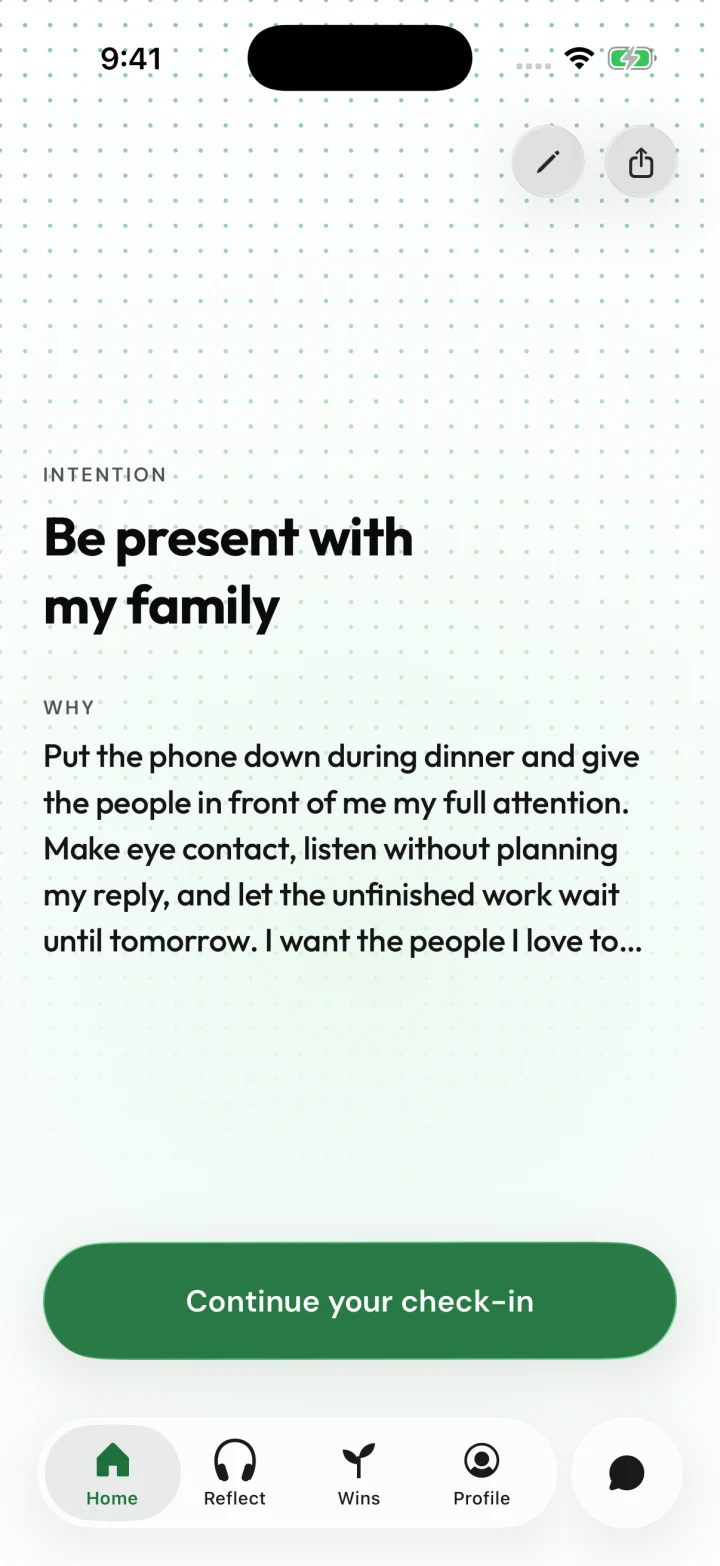
A sentence that means something to you.
Your words name what matters. The reason underneath makes them personal.
Clarido sample content · Tap screen to enlarge.
3. Give it one small action
Choose one moment today to practice your intention. What could you do there?
| Intention | One way to practice it |
|---|---|
| Be present with my family | Put my phone away when we sit down to eat. |
| Give my work my attention | Close messages while I write the first draft. |
| Make time for myself | Keep ten minutes after lunch for a walk. |
Choose something that fits the day you actually have. If lunch is your busiest hour, find another moment. An action you can try is more useful than a plan that depends on everything going smoothly.
For help connecting an action to a particular moment, see how to make an if-then plan.
4. Put the intention where you'll meet it
Choose a place you already look: a note beside your laptop, a card near the kettle, or your phone's lock screen. Pick the place that fits the moment you're trying to change.
If your intention is about leaving work behind, a note by your laptop may be useful as you close it. If it's about being present before opening messages, your lock screen gives the words a place before the inbox.
Seeing the reminder doesn't make the choice for you. It gives you another chance to remember what you wanted to practice.
5. Check in, then decide what to keep
Later, take a moment to ask:
- When did I act with this intention in mind?
- What got in the way?
- What do I want to try next?
Keep the answer close to what happened. “I put my phone away for dinner, then picked it up when work called” gives you something to consider. Perhaps tomorrow you'll tell your team when you're unavailable or agree on a way to reach you for urgent work.
You can keep the same intention and change the action. If thinking about the day turns into repeating the same criticism of yourself, try a more specific reflection, or leave it for another time.
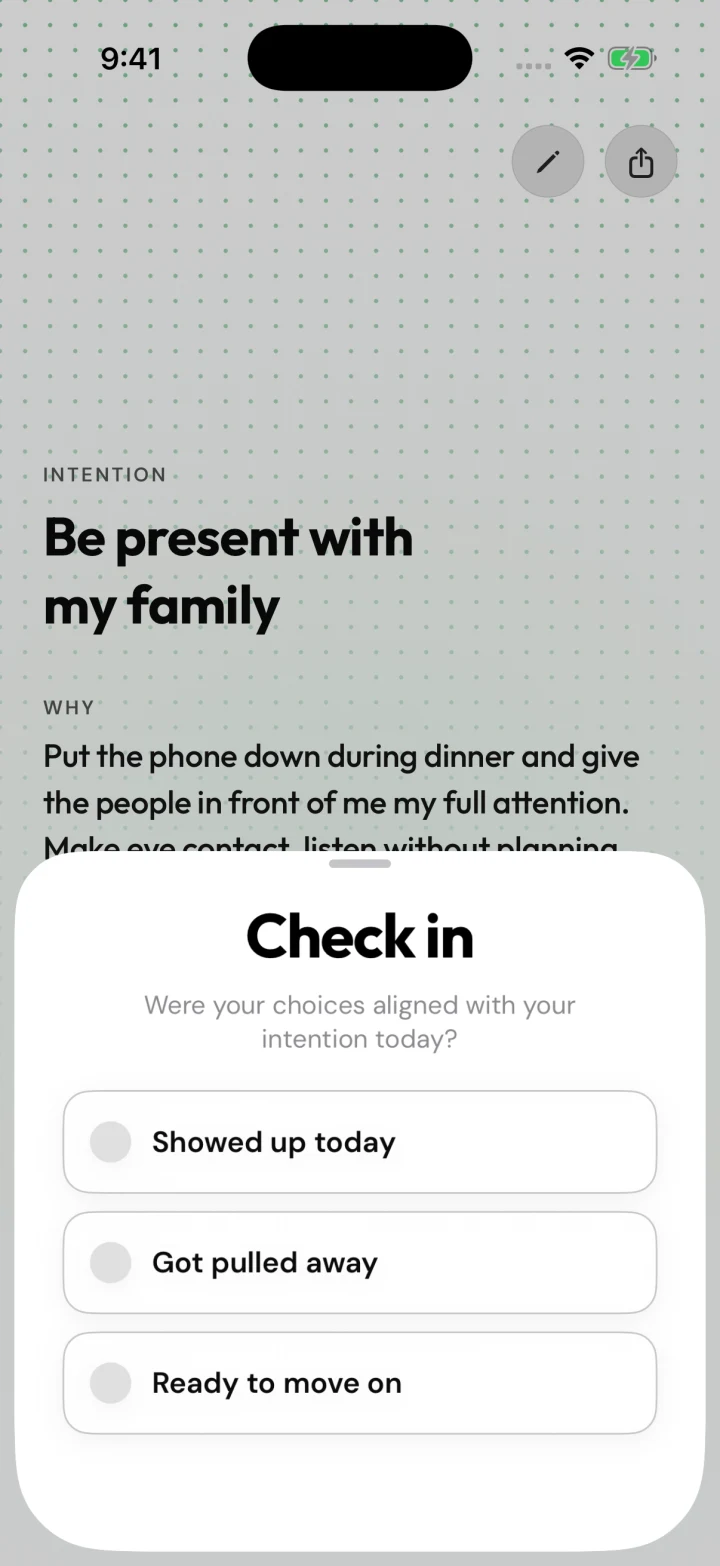
Notice what happened today.
Did you show up, get pulled away, or feel ready to move on? Use the answer to choose what comes next.
Clarido sample content · Tap screen to enlarge.
Do I need a new intention every day?
You can keep one for as long as it helps. “Be present with my family” might stay relevant for weeks, even as you practice it in different situations. Choose new words when your priorities change or the current intention no longer fits.
Missing a day doesn't require a new intention either. You can return to the one you already chose.
Setting an intention with Clarido
If you want help finding the words, you can talk through what's on your mind with Clarido. Its coach helps you turn what matters into one personal intention, which you can edit and put on your lock screen.
Check-ins give you a place to notice how you showed up. When something needs more thought, a guided audio reflection offers space to explore it and choose a next step. You can keep your intention or change it as you learn.
Get the next essay
Occasional articles on choosing what matters and returning to it. Unsubscribe anytime.